
Polish Any Draft Before You Hit Send!
You write an important email to a client, reread it twice, and still worry about typos or awkward phrasing. Most professionals stress about writing quality, especially when the stakes are high. One grammatical mistake or unclear sentence can undermine credibility.
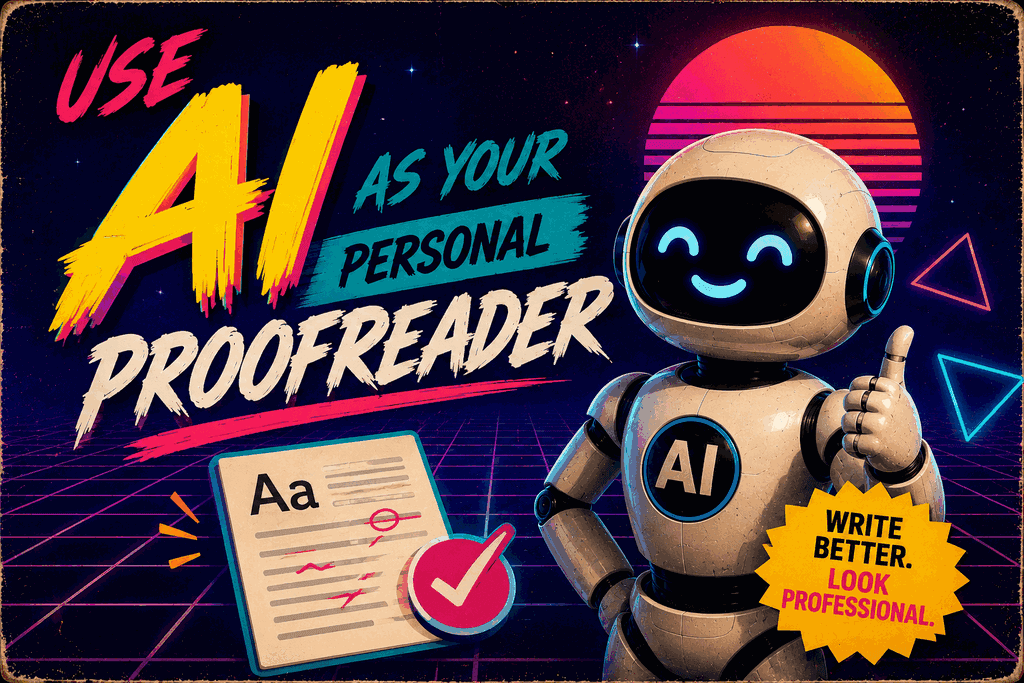
ChatGPT can serve as your judgment-free second pair of eyes. Instead of bothering colleagues or waiting for an editor, you can instantly spot errors, improve clarity, and refine tone. Here’s how to turn AI into your reliable writing partner.
Paste your draft and ask for a corrections list.
Copy your email, memo, or proposal into ChatGPT. Don’t ask it to rewrite everything. Instead, request a detailed breakdown:
Act as a proofreader and provide a list of spelling, grammar, punctuation, and clarity issues in the following text. Number each issue and explain what needs fixing.

<paste your draft here>This gives you control. You see exactly what needs attention without losing your voice or style.
❓ Pro Tip: Protect sensitive info. Redact names, numbers, or client details before pasting text. You can turn off data-sharing in your AI tool if you’re handling confidential material.
Review suggestions one by one.
ChatGPT will return a numbered list of potential problems. Go through each item and decide whether to accept the change.
If you spot any additional errors, correct the prompt with a single line.
You keep authorship while fixing errors faster.
Check for tone and flow (optional second pass).
If your draft feels technically correct but choppy, run a second analysis:
Review this text for readability and flow. Point out any awkward sentences or unclear phrasing that might confuse readers. Don't rewrite, just flag areas for improvement.This catches issues beyond grammar: sentences that are too long, transitions that don’t work, or paragraphs that jump around. You can then rephrase problem areas yourself.
Apply the changes.
Make updates directly in your draft. Accept the fixes that improve clarity and ignore the ones that don’t fit your style. Keep your original version saved until you’re confident in the updates.
Build consistency across communications.
After a few rounds, you’ll notice patterns in the feedback. Maybe you consistently mix up “affect” and “effect” or write overly long sentences. These patterns become your personal editing checklist.
You can even ask ChatGPT to focus on your weak spots:
I often struggle with comma usage and tend to write run-on sentences. Focus your proofreading on those two areas.What AI Proofreading Catches That Spellcheck Misses
Your word processor’s spellcheck catches misspelled words and the occasional grammar slip. It cannot tell you that a sentence is confusing, that your tone reads as cold, or that paragraph three contradicts paragraph one. That is the gap AI fills. Used as a proofreader, it flags:
- Clarity problems — sentences a reader could take two ways.
- Tone mismatches — a line that sounds blunt or defensive when you meant to be warm.
- Wordiness — the eight-word phrase that should be three.
- Logic gaps — a claim with no support, or a transition that jumps.
- Consistency — “log in” vs “login,” a name spelled two ways, mixed tenses.
None of those are spelling errors, and all of them quietly cost you credibility.
Mistakes to Avoid
- Letting it rewrite everything. Ask for a list of issues, not a finished draft. The moment you accept a full rewrite, the writing stops sounding like you.
- Accepting every suggestion. AI will sometimes “fix” a deliberate choice — a short punchy sentence, an informal aside. You are the editor; it is the assistant.
- Pasting confidential text. Redact names, numbers, and client details first, or turn off chat history for sensitive material.
- Skipping the final read. Always read the corrected version yourself. AI can introduce a subtle change in meaning while “improving” a sentence.
AI Proofreading FAQ
Is AI proofreading better than Grammarly?
They do different jobs. Grammarly is great for real-time grammar and spelling as you type. A chatbot is better for judgment calls — tone, clarity, flow, and “does this argument hold together.” Many people use both: Grammarly for the mechanics, AI for the second-opinion pass.
Will it make my writing sound generic?
Only if you let it rewrite. When you ask for a numbered list of issues and fix them yourself, your voice stays intact — you are just removing the errors and rough edges. The flagging approach is the whole point.
Can I use it for long documents?
Yes, but work in sections. Proofread a long report one chapter or section at a time — the feedback is sharper, and you are less likely to miss a flagged issue buried in a wall of notes.
📌 Key takeaway: By using AI to flag issues instead of rewriting your work, you sharpen clarity, reduce errors, and project credibility in every message.
More details on this topic can be found here -> How I’m Using ChatGPT for Proofreading — Including Prompts
Related guides
- Polish Your LinkedIn Posts with AI
- Turn Slides Into Talking Points With AI
- why your AI gives generic answers
- How to Write Better Emails With AI in 5 Minutes
- 3 AI Prompts I Reuse Every Day: The Editor, the Extractor, and the Explainer
Frequently asked questions
How do I use ChatGPT to proofread my writing?
Paste your email, memo, or proposal into ChatGPT and ask for a numbered list of issues rather than a full rewrite. It returns specific problems you can review one by one and accept or ignore. This keeps you in control of your voice while fixing errors faster than waiting on a colleague or editor.
Will AI proofreading make my writing sound generic?
Only if you let it rewrite everything. When you ask for a list of issues and fix them yourself, your voice stays intact because you are just removing errors and rough edges. AI will sometimes try to fix a deliberate choice like a short punchy sentence, so you stay the editor and it stays the assistant.
What does AI proofreading catch that spellcheck misses?
Spellcheck catches misspelled words and basic grammar, but it cannot tell you a sentence is confusing or your tone reads as cold. AI flags clarity problems, tone mismatches, wordiness, logic gaps, and consistency issues like log in versus login. None of those are spelling errors, yet all of them quietly cost you credibility.
Is it safe to paste a confidential email into ChatGPT for editing?
Redact names, numbers, and client details before pasting, or turn off chat history for sensitive material. For long documents, work in sections rather than dumping everything at once, since the feedback is sharper and you are less likely to miss a flagged issue. Always read the corrected version yourself before sending.