
When people picture a good prompt, they imagine something long and detailed. A wall of instructions. A perfectly engineered paragraph.
The prompts I actually reach for most are the opposite. Some of them are two words long. They work because they change how AI responds, not because they’re complicated.
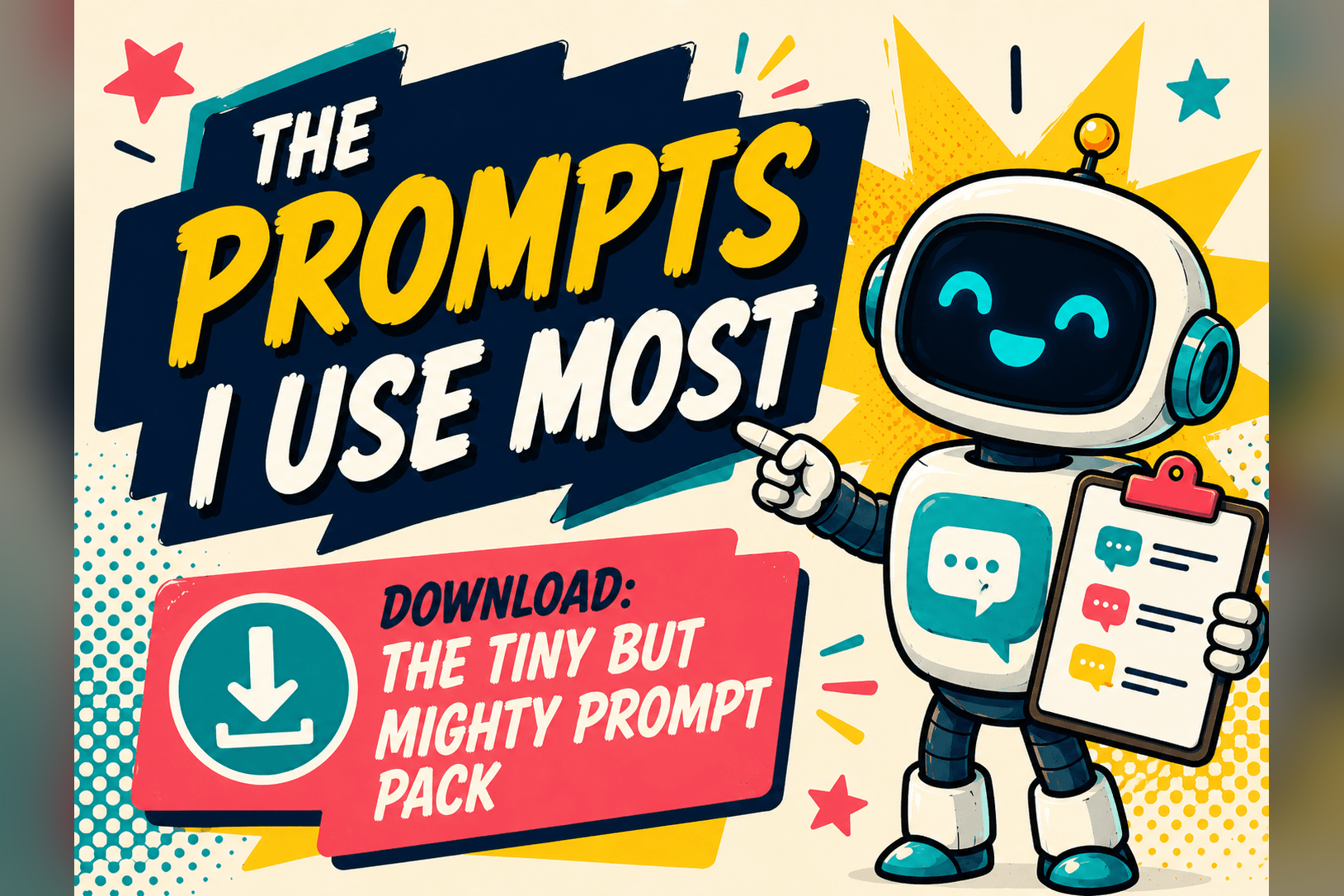
Here are the six I use almost every day. (Want more? I packaged 12 short prompts like these as a free Notion template — grab The Tiny But Mighty Prompt Pack here.)
The two-word fact-check
Are you sure?That’s the whole prompt. Two words.
When AI gives me an answer that feels even slightly off, I ask this before doing anything else. Half the time it doubles down and I trust it more. The other half it says “actually, let me reconsider” and corrects itself. Either way, I learn something.
It’s the simplest fact-check there is, and almost nobody uses it.
Turn AI into a brainstorm partner
Ask me questions to help me brainstorm this.Most people tell AI what they want and take whatever comes back. This flips it. Instead of answering, AI starts asking you questions, and those questions pull ideas out of you that you didn’t know you had.
I use this whenever I’m stuck at a blank page. The conversation that follows is almost always better than anything I would have gotten from a single request.
Think it through before you commit
Before I start, help me think this through. I'm considering X.This one is about stepping back before diving in. When I’m about to make a decision or start something new, I describe it and let AI poke at it before I commit.
It turns AI into a thinking partner instead of an order-taker. You’d be surprised how often it catches something you would have run straight past.
Find your blind spots
What am I not asking that I should be?This is my favourite prompt for blind spots. You can only ask about what you already know to consider. This prompt surfaces the things you didn’t know to think about.
I use it before meetings, before big decisions, and any time I have that nagging feeling I’m missing something.
Get honest pushback
What would you push back on here?AI is trained to be agreeable. Left alone, it will tell you your idea is great and your writing is strong. This prompt overrides that and asks for honest resistance.
A related move worth knowing: you can ask AI to “steelman” or “devil’s advocate” a position. Steelman means make the strongest possible case for something, even if you disagree with it. Devil’s advocate means argue the strongest case against. Asking for both on the same idea is one of the best ways to stress-test your thinking before you act.
Cut through the flattery
Is this actually good, or are you just being nice?I ask this about my own work constantly. AI defaults to encouragement, which feels nice but isn’t always useful. This prompt gives it permission to be honest.
The answers are occasionally humbling. They’re also the reason the work gets better.
🎁 Want 12 more short prompts like these?
I put together a free Notion template called The Tiny But Mighty Prompt Pack — 12 short prompts that change how AI responds. Save it, copy individual prompts, or duplicate the whole thing into your own Notion. Free with your email address.
Why short prompts win
The prompts you use are one of the clearest signals of where you are on the AI skill curve. Beginners write long, complicated prompts because they think more instructions equal a better answer. People further along use simple prompts with intention — they know exactly which lever they’re pulling.
If you’re curious where you currently land on that curve, I built a free 5-minute quiz that tells you your exact level, what’s working, and the one move that would push you to the next one. Take the AI Amplified Quiz here — seven questions, instant result.
Related guides
- The Amplified Prompt Library (50 copy-paste prompts)
- Take the AI Amplified Quiz
- How Good Are You at AI? The 4 Skill Levels
- The AI tool I use most
- more beginner AI tips and tricks
Frequently asked questions
What makes a good AI prompt?
A good prompt is clear about what you want, not necessarily long. The most useful prompts are often short — they change how the AI responds rather than piling on instructions. Asking "Are you sure?" or "What would you push back on here?" works because it shifts the AI behavior, not because it is complex.
What are the best short AI prompts to use?
A few that work almost daily: "Are you sure?" to fact-check, "Ask me questions to help me brainstorm this," "What am I not asking that I should be?" to find blind spots, and "Is this actually good, or are you just being nice?" to get honest feedback.
Do longer prompts get better AI results?
Not usually. Beginners tend to write long, detailed prompts; experienced users get better results with short, intentional ones. Length is not the lever — knowing which short instruction changes the AI behavior is.
How do I get AI to give honest feedback instead of flattery?
Ask directly: "Is this actually good, or are you just being nice?" or "What would you push back on here?" AI defaults to encouragement, so you have to explicitly give it permission to be critical.