
🏆 Which AI Are You?
For about a year, I thought I was good at AI.
I used it every day. I had my prompts. I got useful answers. Then I watched someone who actually knew what they were doing, and I realized I’d been parked at the same level for months without knowing it. I wasn’t bad at AI. I just had no idea there were levels above where I was sitting.
Here’s the framework I wish I’d had back then. Four levels. Figure out which one you’re at, and the next move becomes obvious. (Prefer the framework as a reference article? How Good Are You at AI? The 4 Skill Levels covers the same levels with signals and upgrade moves.)
🎁 Free download: Level Up Your AI Cheat SheetThe exact habits and prompts that move you from each level to the next.
Level 1: AI Curious
You’ve opened ChatGPT or Claude a few times. You know AI is a big deal. You’ve asked it some questions and gotten answers that were fine. But you haven’t built it into anything yet.
You’re here if: AI is something you try occasionally, not something you reach for by default. You mostly use it like a search engine.
The one move that levels you up: Pick one real task you do every week and commit to using AI for it every single time. Repetition is what turns AI from a novelty into a habit.
Level 2: AI User
You use AI regularly. You’ve got a few things you always use it for. You’re getting real value. This is where most people land, and it’s also where most people quietly get stuck, because it feels like enough.
You’re here if: You use AI most days but always for the same handful of tasks, always in the same tool, always by typing into a chat box.
The one move that levels you up: Start giving AI context before you ask. Who you are, what you’re working on, what a good answer looks like. The difference between a generic answer and a great one is almost always the context you did or didn’t provide.
Level 3: AI Advanced
You’ve stopped treating AI like a search engine and started treating it like a thinking partner. You use different tools for different jobs. You give context without thinking about it. You catch it when it’s wrong.
You’re here if: You have a small stack of AI tools and you know which one to reach for. You verify important answers. You use AI for things most people wouldn’t think to.
The one move that levels you up: Build repeatable workflows. Stop solving the same problem from scratch each time and start creating templates, saved prompts, and processes you reuse.
Level 4: AI Amplified
AI isn’t a tool you use anymore. It’s woven into how you work. You delegate whole chunks of work to it. You build systems around it. The gap between what you can do in a day and what someone at Level 1 can do isn’t 2x. It’s closer to 10x.
You’re here if: You’re running workflows, building things, and using AI in ways that genuinely change your output, not just your speed.
The one move that keeps you growing: Teach it. The fastest way to find the gaps in your own AI skills is to explain them to someone else.
💡 “Most people aren’t bad at AI. They’re just stuck at a level they don’t know they’re on.”
The full cheat sheet — the specific habits, prompts, and workflows that move you up each level — is in the free download above.
If you want to go deeper on any of this, the right tool for each job and better prompting issues cover the Level 2 and Level 3 moves in detail.
🎯 Try this today: Read back through the four levels and be honest about which one you’re at.
🎯 Find Your AI Level
Reading the levels is one thing. Knowing exactly where you sit is another.
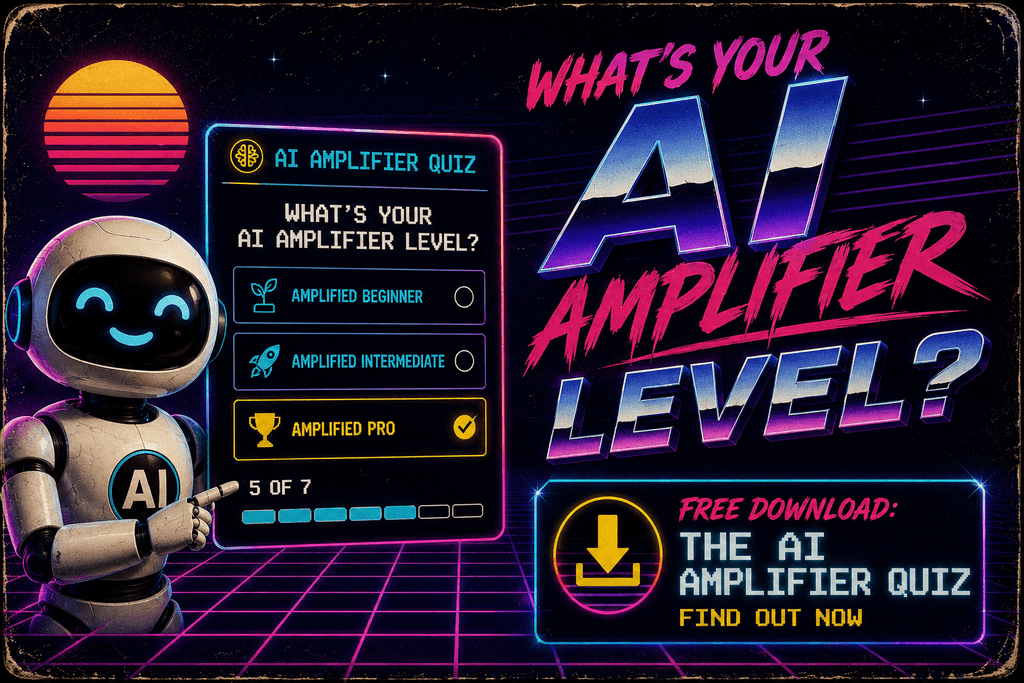
I built a free 5-minute quiz that tells you your level, what’s working, and the single move that would push you to the next one. Seven questions, instant result.
People keep replying with “this is uncomfortably accurate,” which is exactly what I was going for.
→ Take the AI Amplified Quiz (5 minutes, free)
Related guides
- Take the AI Amplified Quiz
- The AI tool stack I actually use
- How Good Are You at AI? The 4 Skill Levels (and How to Level Up)
- Your Personalized AI Learning Path: Choose Your Own Adventure + Copy-Paste Prompts!
- The 2026 AI Starter Stack: Learn Faster, Work Smarter
Frequently asked questions
What are the four AI skill levels?
AI Curious (you've tried it a few times but haven't built it into anything), AI User (you use it regularly for the same handful of tasks), AI Advanced (you treat it as a thinking partner, use different tools for different jobs, and verify important answers), and AI Amplified (it's woven into how you work and you delegate whole chunks of work to it). Most people land at Level 2 and quietly get stuck there.
How do I get better at using AI?
Figure out which of the four levels you're at, then make the one move that fits. If you're an occasional user, commit to one weekly task and use AI for it every time. If you use it regularly, start giving it context before you ask. If you're already advanced, build reusable templates and saved prompts instead of solving the same problem from scratch.
Why am I stuck at the same level with AI?
Most people get stuck at Level 2 (AI User) because it feels like enough. You use it most days, always for the same tasks, always by typing into a chat box, so there's no obvious signal that more is possible. The fix is recognizing the level above exists and making the specific upgrade move for where you are.