
You ask AI to help you write something. It comes back with five paragraphs of polished, completely useless text that sounds like it was written by a committee.
You ask it a question. It gives you a textbook answer that could apply to literally anyone.
You ask it to fix something. It rewrites the whole thing in a voice that isn’t yours.
This isn’t an AI problem. It’s a prompting problem. And it has a very simple fix.
01 of 02
The Real Reason You're Getting Generic Answers
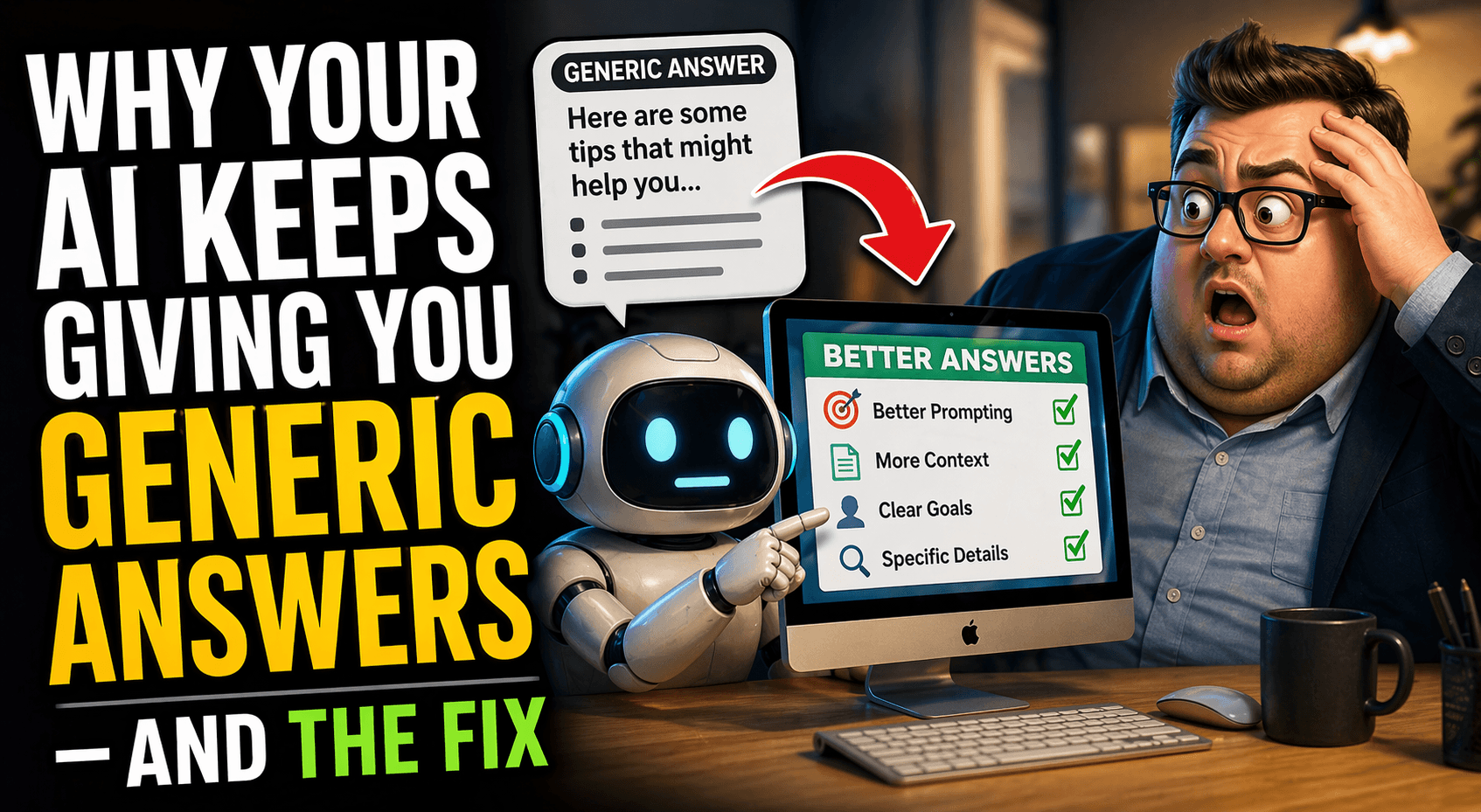
AI responds to exactly what you give it. Vague input, vague output. The model isn’t being lazy, it’s filling in the blanks you left with the most statistically average response it can generate.
Three things turn a generic prompt into a useful one:
1. Context, who you are, what you’re working on, why it matters
2. Constraints, format, length, tone, what to avoid
3. Definition of done, what a good answer actually looks like
Most people include none of these. Here’s what that looks like in practice.
02 of 02
10 Before & After Rewrites
✍️ Writing
🔴 Before:
Write an email to my team about the new policy.🟢 After:
Write a short internal email to my team of 8 announcing
a new expense approval policy starting next month.

Tone: direct but not cold — I want them to feel informed,
not micromanaged.
Length: under 150 words.
Include: what's changing, why, and one clear next step.
Do NOT include: corporate jargon or phrases like
"going forward" or "please be advised."🔍 Research
🔴 Before:
Tell me about electric vehicles.🟢 After:
I'm considering buying my first electric vehicle in the
next 6 months. Budget: $35,000. I drive about 40 miles
a day and don't have a home charger yet.

Give me:
- The 3 most practical options in my budget
- What I actually need to know about charging
- The honest downsides nobody talks about
- One question I should ask a dealer before buying📋 Planning
🔴 Before:
Help me plan a project.🟢 After:
I need to launch a new company website in 6 weeks.
I have a designer but no developer yet. Budget is tight.

Break this into weekly milestones with:
- What needs to happen each week
- What I should decide or sign off on
- Where things usually go wrong on projects like this
- What I can cut if we fall behind💬 Advice
🔴 Before:
How do I deal with a difficult coworker?🟢 After:
I have a coworker who interrupts me in meetings and
takes credit for shared work. I'm mid-level, they're
at the same level. We have to collaborate on a major
project for the next 3 months.

I don't want to escalate to my manager yet.
Give me 3 specific, low-confrontation ways to handle
this that actually work — not generic "have a conversation"
advice.📝 Editing
🔴 Before:
Edit this for me.🟢 After:
Edit this for clarity and conciseness. My audience is
non-technical small business owners.

Keep my voice — casual and direct.
Cut anything that doesn't add value.
Flag any sentence that might confuse someone
who doesn't know this industry.

Here's the text: [paste]📊 Analysis
🔴 Before:
What do you think about this idea?🟢 After:
I'm considering launching a paid newsletter in the
productivity space. I already have 2,000 free subscribers
and a 38% open rate.

Play devil's advocate. Tell me:
- The 3 most likely reasons this fails
- What I'm probably underestimating
- One question I haven't asked myself that I should
Don't tell me what I want to hear.🎯 Summarization
🔴 Before:
Summarize this article.🟢 After:
Summarize this article for someone who has 2 minutes
and needs to decide whether it's worth reading in full.

Give me:
- The core argument in one sentence
- 3 key points
- One thing I should be skeptical about
- Whether I should read the whole thing (yes/no and why)

Here's the article: [paste]🧠 Learning
🔴 Before:
Explain machine learning.🟢 After:
Explain machine learning to me. I'm a marketing manager
with no technical background. I need to understand it
well enough to have an intelligent conversation with
our engineering team next week.

Use one analogy. No jargon. Under 200 words.
End with two questions I could ask in the meeting
that would make me sound informed.📣 Social Media
🔴 Before:
Write me a LinkedIn post.🟢 After:
Write a LinkedIn post about a lesson I learned launching
my first product.

The lesson: you should talk to customers before building
anything.
My tone: conversational, a little self-deprecating,
not preachy.
Length: short — 150 words max.
Do not start with "I" and don't use hashtags.
End with a question that invites real responses,
not just likes.🤝 Difficult Conversations
🔴 Before:
Help me write a message to my friend.🟢 After:
Help me write a text to a close friend I've been distant
from for 6 months. The distance was my fault — I got
overwhelmed and went quiet.

I want to reconnect without making it a big dramatic
apology. Keep it warm and low-pressure.
Length: 3-4 sentences.
Sound like a real person, not a greeting card.💡 AI doesn’t give you generic answers because it’s bad. It gives you generic answers because you gave it a generic question.
All 10 rewrites, plus a fill-in-the-blank prompt builder and a 5-second checklist for every prompt you write, are in this week’s free download 👇
🎁 This week’s free download:
10 before/after rewrites across the most common tasks, copy, adapt, and use with any AI tool.
✅ 10 before/after prompt rewrites
✅ Fill-in-the-blank universal prompt template
✅ The 5-second prompt checklist
✅ One-line fixes for the most common prompting mistakes
✅ Works with Claude, ChatGPT, Gemini, any tool
Related guides
- prompt refinement basics
- how to catch AI hallucinations
- the AI tool stack I actually use
- You’ve Been Googling Your AI — Here’s the Fix (Free Download)
- The Complete Guide to AI Prompting (for People Who Aren’t Engineers)
Related: How to improve AI accuracy: 7 fixes that actually work.
Frequently asked questions
Why does AI keep giving me generic answers?
Because AI responds to exactly what you give it: vague input, vague output. It isn't being lazy, it's filling the blanks you left with the most statistically average response it can generate. A generic question gets a generic answer.
How do I write a better AI prompt?
Add three things most people leave out: context (who you are, what you're working on, why it matters), constraints (format, length, tone, what to avoid), and a definition of done (what a good answer actually looks like). For example, instead of write an email to my team, say it's a sub-150-word internal email to a team of 8 about a new expense policy, direct but not cold, with no corporate jargon.
What makes a prompt specific instead of vague?
Specifics about your situation and what you want back. Tell me about electric vehicles is vague; naming your budget, your daily mileage, and asking for three practical options plus the honest downsides and one question to ask a dealer is specific. The clearer the picture and the constraints you give, the more useful and personal the answer.
Can I get AI to keep my own writing voice?
Yes, you just have to tell it to. When you ask it to edit, say keep my voice, describe that voice (for example casual and direct), name your audience, and tell it to cut anything that doesn't add value. Without that instruction it tends to rewrite everything in a generic committee voice that isn't yours.